PPWR: What Changes for Your Bottles on 12 August 2026
The EU packaging rules change on 12 August 2026. What PPWR means for wineries, who counts as the manufacturer, what you must do now, and what is not due until 2028.
'Scan with Glasswise,' an innovative feature that maximizes your QR code's potential. Learn how you can legally add extra value to your winery and directly connect your wines with customers.

David Wippel
Founder of Glasswise
During the development of Glasswise, I constantly held discussions with vintner friends. Even though Glasswise fundamentally focuses on complying with legal regulations, I didn’t want to develop something that overlooked the needs of businesses.
The legally compliant nutritional labeling is, of course, central to this. However, I pondered whether this obligatory requirement could be transformed into an advantage. “Scan with Glasswise” embodies this advantage. If you choose to dedicate part of the back label to an e-label QR code, it should genuinely benefit your business.
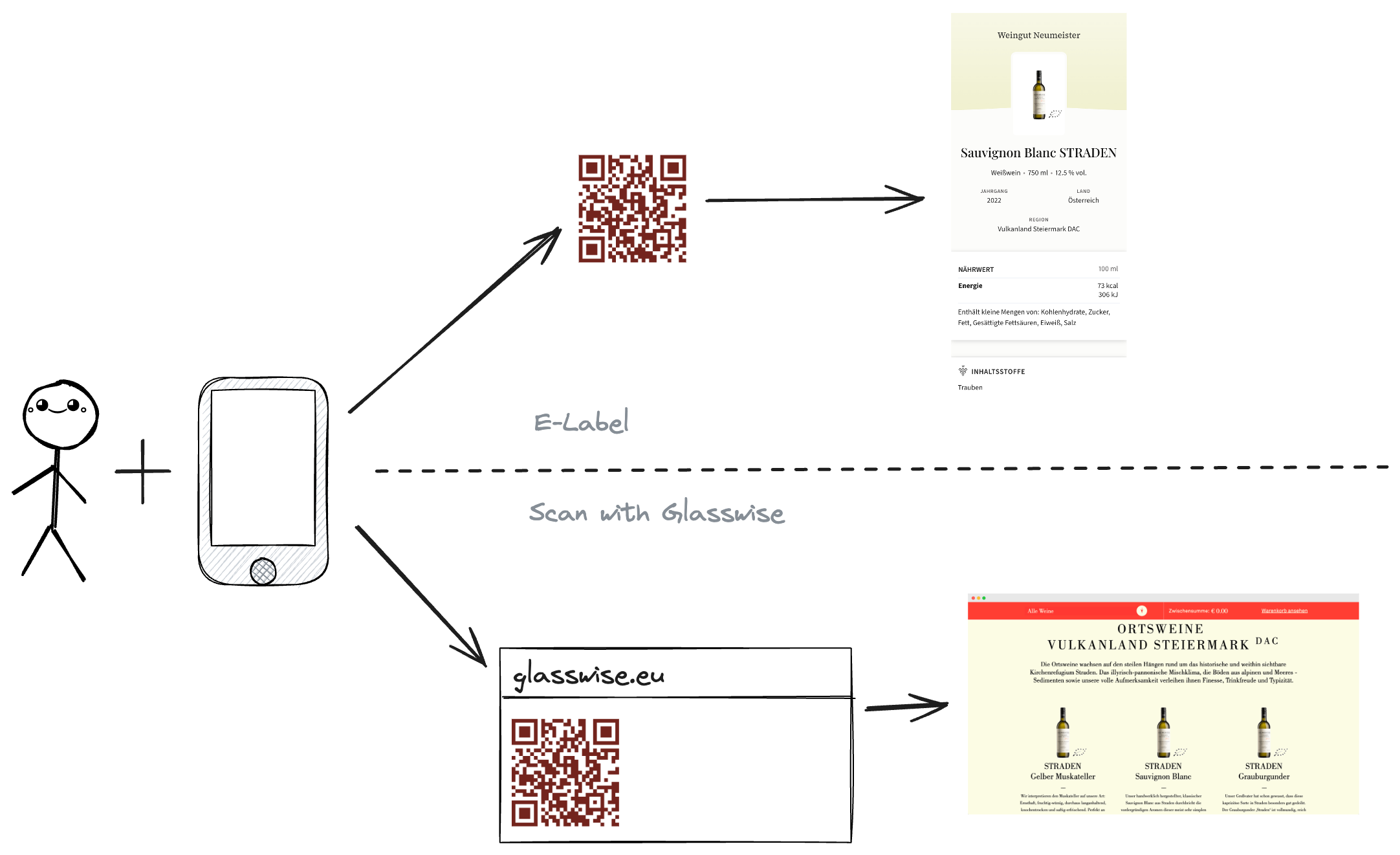
“Scan with Glasswise” adds a second way to read the same QR code. Scanned with a phone camera, the printed code still opens the e-label. Read through the Glasswise scanner, a wine list, or a retailer’s site, it opens a destination you choose, such as your website or shop. The mandatory path stays unchanged.
Each QR code primarily contains text encoded into its image. In most cases, this is a URL to a website. With Glasswise, it’s the link to the E-Label. Scanning the QR code through the Glasswise website enables “Scan with Glasswise” to read the URL, identify the wine, and redirect to the configured page.
No problem. The beauty of “Scan with Glasswise” is that I can also support other QR codes. Simply scan the QR code in the Glasswise application and set up the “Scan with Glasswise” feature. Done.
A common argument against QR codes, and thus against “Scan with Glasswise,” is that nobody scans QR codes, let alone through a different website. It’s a valid point.
Making “Scan with Glasswise” known to your customers is undoubtedly a challenge. This is where my personal strong interest in wine and food comes into play. Essentially, I am part of the target audience and can thus develop a suitable approach and strategy. I actively network with people in the industry and work on collaborations with agencies specializing in wine marketing. I definitely see it as my task to make “Scan with Glasswise” known in the “scene,” thereby creating value for you.
The development of “Scan with Glasswise” is complete, and we are currently in the beta phase with selected wineries. The feature will be available to all Glasswise users in Q4 2024.
If you would like to use “Scan with Glasswise” beforehand, you are welcome to join. Whether you produce sparkling wines or want to label your wines early with an E-Label, we are happy to include you in the test group.
The EU packaging rules change on 12 August 2026. What PPWR means for wineries, who counts as the manufacturer, what you must do now, and what is not due until 2028.
Six requirements that tell you a professional e-label provider apart before the label goes to print, from availability and GS1 Digital Link to data ownership.
A comprehensive comparison of every major wine e-label provider in Europe. Bottlebooks, U-Label, IMERO, Glasswise, APyS, LITTLEWINE, and more. Pricing models, features, and what matters.
Start your free 30-day trial. No credit card required. Set up your first e‑labels in minutes and see what a branded wine data platform looks like.